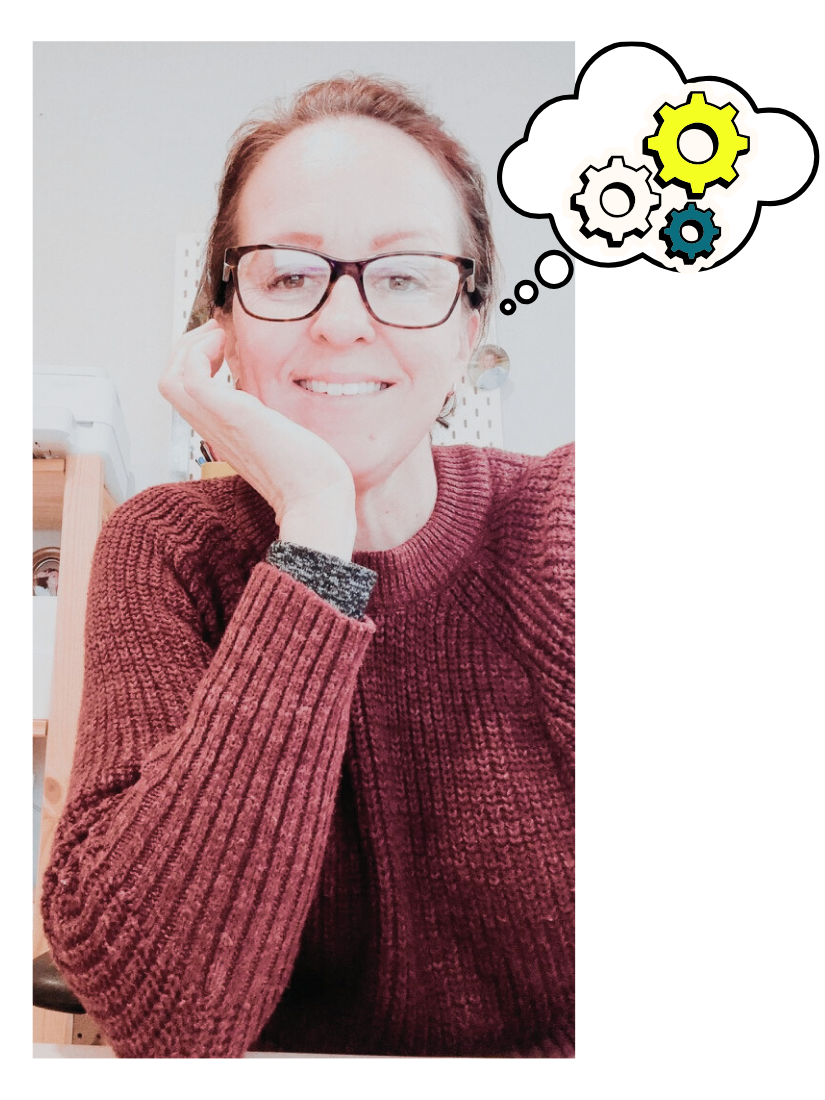
For years, I avoided reaching back out to past customers because I felt like I was bothering them. I figured if someone wanted another appointment, they'd call me. So I didn't call them. I just waited.
Then one week our calendar was completely empty. Not slow. Empty. And in a state of straight-up desperation, I started calling people we had serviced in years past.
It was terrible. It was awkward. And it taught me the single most useful thing I've ever learned about running this business: people were fine with hearing from me. More than fine, actually. They were grateful. They appreciated the reminder, and they appreciated the seasonal discount I offered them. The thing I thought would annoy people turned out to be a thing they thanked me for.
What That First Desperate Week Actually Looked Like
This was back in 2018, and I had never cold-called anyone in my life. I fully expected people to hang up on me. But one of the perks of giving genuinely good service is that people are willing to talk to you when you call, even out of the blue.
My script went something like this: "Hi ____, this is Emily from The Village Chimney Sweep. I've been going through our records and it looks like the last time we were at your house was ____. I'm wondering if you think it's time for another appointment? We have our returning customer discount going on right now."
On a good day I could make about 40 calls. Of those, maybe 15 people would actually pick up. Of those 15, I could usually count on 5 to 7 booking an appointment. That's not a bad conversion rate once someone's on the phone with you. The problem was getting them on the phone. Some days I hit my numbers in an hour. Other days it took six hours of dialing to get there. It filled the calendar, but it was completely unreliable, and it ate an entire day every single time I needed it.
Why Most Home Service Owners Skip This Entirely
Here's what I see over and over with other home service business owners: they neglect reaching out to past customers altogether. Not because it doesn't work. Because they think they don't have time.
That's the part that gets me. Most people assume a system like this has to be complicated, so they never bother setting one up. What actually took me less than 60 minutes to build has earned thousands of dollars since. And here's the best part: those dollars show up exactly when I need them, because I can trigger a message the moment things get slow instead of waiting around hoping the phone rings.
"The lack of time excuse doesn't hold up when the setup itself takes less time than a lunch break."
— Emily Martinez
What My System Actually Looks Like Now
I run everything through Housecall Pro, and I have three separate pieces working at once.
- A digital reminder email that automatically sends 11 months after a customer's last job, so they know it's about time for their next service.
- A physical postcard that goes out at the 12 month mark, for the customers who respond better to something in their mailbox than their inbox.
- A manually triggered system I use whenever I need to fill the schedule fast, built on customer tags so I can message small, specific groups instead of blasting everyone the same generic message.
That third one is where the tagging really pays off. I've broken our customer database down so I can pull, say, everyone we serviced in July of 2024 and send them something that actually feels relevant to them: "It looks like the last time we saw you was in July of 2024. If you've been using your chimney, it might be time for another appointment." It doesn't feel like a mass text because, in a way, it isn't. It's a small, targeted group getting a message that applies to them specifically. If you haven't built out the tagging side of your customer database yet, that's the piece worth setting up first — it's what makes every message after it actually land. And if figuring out what to actually say is the part that trips you up, the Message Builder writes personalized win-back messages like this one for you in about five minutes.
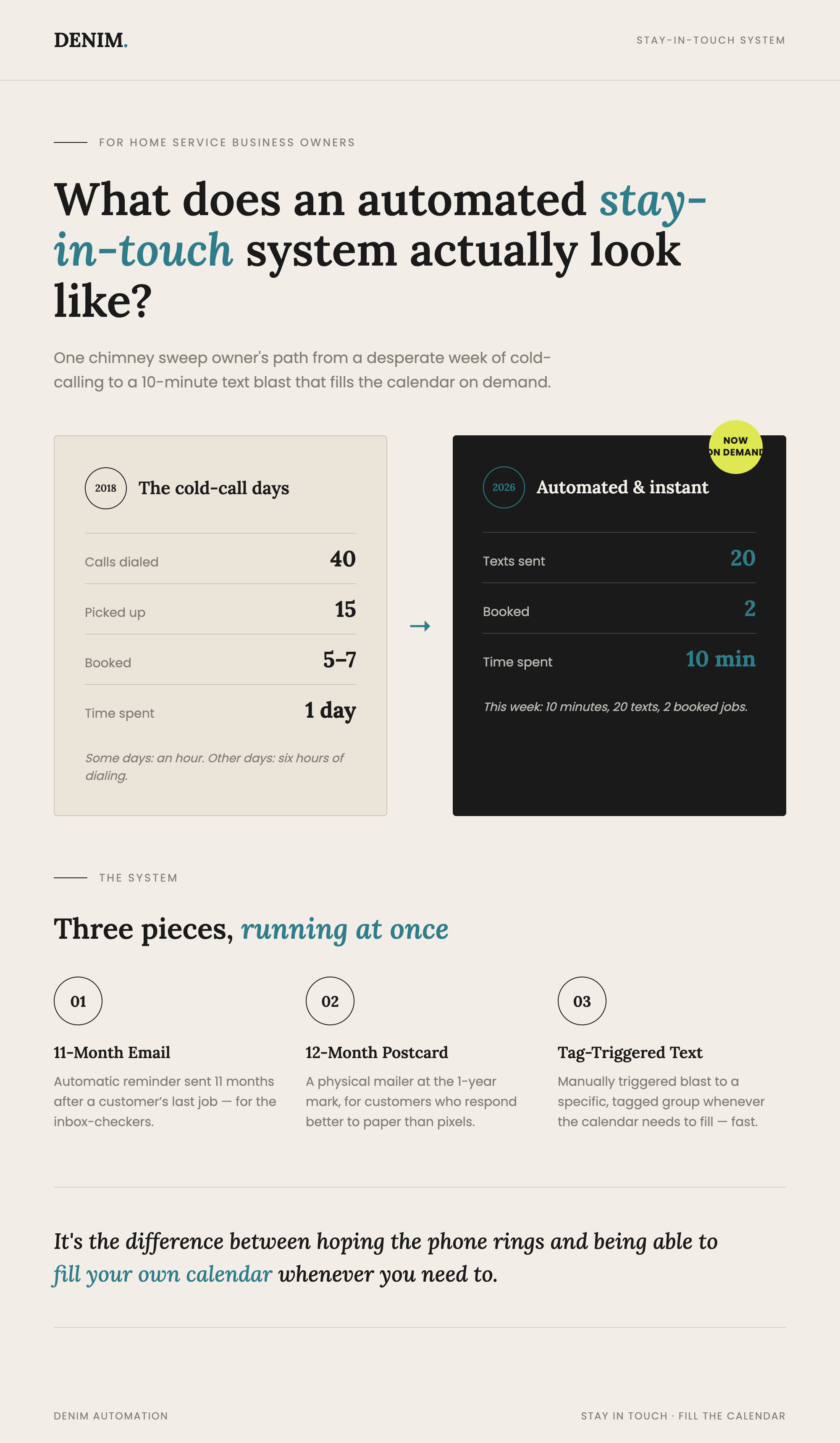
What took me less than 60 minutes to set up has earned thousands of dollars since. Because I can trigger it whenever I need to, that money shows up exactly when business is slow, not just whenever the phone happens to ring.
The Proof Is in How Boring This Has Become
Just this week I needed a couple more jobs on the schedule. I spent 10 minutes putting together a text and sent it to 20 people. Two of them booked. Ten minutes, two jobs, done.
Compare that to 2018, when filling the schedule meant a full day of dialing and hoping people picked up. Same underlying idea, completely different amount of effort. The tools caught up to the instinct I stumbled into by accident during that empty week, and now filling gaps in the schedule is something I do in the time it takes to drink a cup of coffee.
The Takeaway
If you're avoiding this because you think you'll be bothering people, you won't be. If you're avoiding it because you think it takes too much time, it doesn't, not anymore. An automated stay in touch system isn't a nice-to-have add-on. It's the difference between hoping the phone rings and being able to fill your own calendar whenever you need to.